Monday, September 29, 2008

I Found Everything When I Found Christ! by Anthony Pezzotta

I Found Everything When I Found Christ!
By Anthony Pezzotta
November 10, 1999

Born in northern Italy, Anthony Pezzotta's ambition was of becoming a missionary priest. He entered a Roman Catholic seminary at the age of eleven to fulfill that goal.

After eleven years of study he was awarded a B.A. degree in Greek and Philosophy. Studies for a Master's degree in Theology took him to England, Germany, Spain and finally back to Italy, where he was ordained to the Roman Catholic priesthood.

He was immediately commissioned as a missionary to the Philippines where he labored for thirteen years. He was soon appointed director for Catholic schools and later of seminaries. At the time of his personal encounter with Christ, he was teaching Philosophy and Theology in a major seminary, of which he was the administrator.

Tony (as he likes to be called) is now an evangelical missionary and Theology Professor at the Asian Theological Seminary and in two Bible Colleges.

____________________________

WHILE STUDYING THEOLOGY in England I began to have serious doubts concerning several doctrines of my Church which I found difficult to reconcile with Scripture. These doubts continued to trouble me even after my ordination, while serving as missionary to the Philippines, but I endeavored to smother them by plunging into my duties and teaching assignments. My schedule was so heavy that I had little time for research or prayer.

After ten years of such hard work I had to return to Italy for a year of rest and recuperation. Without the pressure of heavy work my doubts about the Church doctrines revived and increased, as did my determination to find satisfactory solutions. I read incessantly and pondered the writings of our great theologians as well as the teachings of the Popes, but all my doubts persisted. I discovered the incompatibility of such traditional Church doctrines as sacramentalism, special priesthood of a selected caste, mediation of Mary and the saints, use of statues and images, papal infallibity, immaculate conception and assumption of Mary, baptismal regeneration of infants, the sacrificial nature of the Mass, compulsory celibacy of bishops and priests, saving faith merely as intellectual assent rather than trust in the person of Christ, etc. When compared with the clear teaching of Scripture, I still doubted whether the church and the Pope after all might really have authority over the Word of God.

Upon returning to the Philippines in 1972 I remembered laying aside all my books of theology, determined to focus my attention on a single Book, the Word of God, particularly the New Testament. The Bible became the source of my reading, meditation, teaching and preaching. in a-relatively short time the Bible answered all my questions and solved all my doubts, including the big doubt on the teaching authority of the Church and the so-called apostolic tradition. 'Even if we,' writes Paul, 'or an angel from heaven should preach a gospel other than the one we preached to you, let him be eternally condemned! As we have already said, so now I say again: If anybody is preaching to you a gospel other than the one you accepted, let him be eternally condemned!' (Gal. 1:8-9, NIV).

At the end of January, 1974, I was in Santa Cruz, south of Manila, where an attractive Conservative Baptist Church had just been built. I had never entered a Protestant church, so I walked quietly into the sanctuary just to look around. Almost immediately I was greeted by a friendly Christian believer. He insisted upon introducing me to the pastor, Ernesto Montealegre, a wonderful man of God.

We talked together for a couple of hours, I doing all I could to make him a Catholic, and he quietly answering all my questions and objections from the Bible, which, as a Catholic priest, I accepted to be God's Word. I did not succeed in converting him to Catholicism, but neither did he convert me to Protestantism. Nevertheless, most of his answers from Scripture, coupled with his sincere love struck me with great force.

From that day a period of restless anxiety started: sleepless nights, agonizing indecision, and a frightening lack of courage to profess the truth of Scripture. During one of those nights, while reading the letter of Paul to Titus, my attention was caught by verse 5 in the third chapter: 'He saved us not because of righteous things we have done but because of His mercy.' (NIV)

I realized that while I had belief in Christ, all my trust for a possible (I wasn't sure) eternal life was in myself, in my attainments, in my works. In fact this was my attitude: After all, I thought, I am faithful to my vows, to the laws of the church and of my order - because of all this, I hope God will give me eternal life in heaven. Realizing that for all my life I had trusted in myself rather than in Christ, I began to fear that perhaps I was not a Christian. What was I to do? If I started living and preaching according to God's Word, soon my bishop and religious superior would order me either to stop or leave. If I took the initiative to leave the priesthood and the church, what would my mother and my relatives say? Their greatest joy and pride was to have a missionary priest in their family. What would my bishop, colleagues and students say? They loved and admired me. 'What would people say? This was my concem.

On the night of February 20, 1974, while I was alone in my room reading the Gospel of John, the Lord answered: 'Yet at the same time many even among the leaders believed in Him. But because of the Pharisees they would not confess their faith for fear they would be put out of the synagogue, for they loved praise from men more than praise from God.' (John 12:42-43, NIV).

Those last words penetrated my heart like a sharp sword, but they also filled me with strength and courage. I realized I had been putting men's approval ahead of God's truth. I repented and felt free! That night I slept without the pain and agonizing indecision of those terrible weeks. The following morning as I awoke, the picture of that kindly Baptist pastor came to my mind. I dressed hastily and drove to his church where we talked for some time. He gave me some pamphlets which I gladly accepted. Then as we were parting I unexpectedly asked him: 'In case I leave my church can I come to stay with you? Would you accept me?' He smiled, saying: 'We have a room here, and the believers will take care of you!'

It took me five long days of prayer before making a decision. I wrongly thought that now all depended on me. But when I thought I had decided, I felt I completely lacked the courage of carrying out my decision!

On Tuesday, February 26, as I awoke and prayed, I realized that the main issue was not leaving the church, but really accepting Christ Jesus alone as my Saviour and Lord of my life. So I did, by God's grace, surrendering to Him all that I had and was. I told Him to take over the direction of my life. And He did. He gave me the strength now that I belonged to Him. I left everything behind: car, books, career .... I wrote a letter of resignation to my bishop and went to live with my new-found spiritual family in Santa Cruz.

What a change! I felt free at last: free from sin, because Jesus had paid for it: free from the slavery of the opinion of others, for at last I could live and preach according to God's Word. How true Christ's words became true for me - If you hold to my teaching, you are really my disciples. Then you will know the truth and the truth will set you free.' (John 8:31-32).

On March 3rd at 12:00 noon I publicly confessed my evangelical faith and was baptized in the Santa Cruz River which flows behind the church. I was filled with joy, and knew freedom from doubt beyond all description. I remember one priest who visited me a few days later asking: 'Tony, how did you dare make such a decision? You have left the CATHOLIC church: twenty centuries of culture, popes, saints, the Priesthood, all that you have learned and loved so sincerely for so long!' And I remember giving him the answer which came from my heart: 'I don't think I really left anything: rather, I FOUND EVERYTHING WHEN I FOUND CHRIST!'


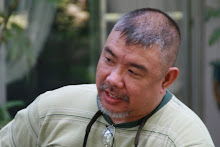
Anthony Pezzotta, or Fr. Pezzotta when I knew him then, was my rector at the Don Bosco Academy in Pampanga.

Sunday, August 17, 2008

Why is Grace so Hard to Embrace? - Be Broken Ministries

Why Is Grace So Hard to Embrace?

grace, n.

The freely given, unmerited favor and love of God.

There is no other doctrine, I believe, that is simultaneously the most difficult to understand and yet the easiest to receive than that of grace. Denominations are split over it, pastors argue about it, cultures ignore it, and only a few ever embrace it. Why is this one little word, this small, yet overwhelmingly powerful concept, so difficult to embrace?

I meet people every day who are weighed down by the burdens of life. Many of them have suffered abuse and terrible trauma in their histories. They were beaten, molested, used by others for sexual gratification and other unspeakable acts. They have scars and pain that runs deep. Most have since learned to use their bodies in some addictive manner to seek relief from this pain, only to realize that their addictions simply lead to more pain (for themselves as well as their friends and family). Their lives are then held up by many in the religious world as examples of decadent, self-indulgent living that Scripture clearly denounces. They are ridiculed, rejected, and run over by the very people entrusted to share the beautiful news of grace with them. Many of them already know God, but run to the dark corners of life in a useless attempt to hide from their shame.

What kind of response do you think I get from these individuals when I tell them that God loves them? Since many of these folks have grown up in religious circles, their response is often one of scoffing or disbelief. They snort, turning their head aside with a mocking grin stretching across their face, as if to say, “Yeah, I’m sure God loves a guy who cheats on his wife and regularly thinks of killing himself.” It is as this point that I bring up the topic of grace.

“Yes, God does love that guy. And you know why?” I ask.

“Probably because He has to. He’s God, after all.”

“No, He loves that guy because He chooses to. He loves that guy because of grace.”

“What does that mean?”

“It means you couldn’t earn it, so you can’t lose it. It’s a love that is constant, pure, perfect, and eternal. And it matters not a wit what behaviors you commit as to whether or not it is given or present. Grace is a one way street of favor and love based solely on the prerogative of the one giving it. The only thing you can do with grace is reject it. And even then, it doesn’t change.”

About half the time, people want to hear more. Some, however, have been so hardened by the difficulties of life they choose to remain locked in their shame, unwilling to even entertain the notion that there is Someone who is constantly and perfectly in love with them - every minute of every day, regardless of how imperfect and broken their lives have become.

Why is it so hard to embrace grace?

I believe you don’t have to go any further than the definition of grace to understand why it is so difficult to fully embrace. Grace is defined as the freely given, unmerited favor and love of God. Let’s break down this definition to see why grace gives us such trouble in our daily, broken lives.

First, grace is freely given. No obligation, no payment for it, no way the person receiving it could demand it. It is freely given, not in a begrudging, obligatory manner like we see so often when human beings give gifts. We are prone to attach strings to our gifts, fully expecting a return on our “investment.” Not so with grace. It is freely given, no strings attached. It is a gift that demands no response and expects no return.

Next, grace is unmerited favor. Unmerited simply means we don’t deserve it and we can’t earn it. Merit has to do with my abilities or giftedness. But grace never takes those qualities into account. They don’t matter in the economy of grace. Whether the most talented or the wealthiest or the smartest or the strongest, grace never sees those characteristics. Neither does grace evaluate the most broken or most wicked or most abused as disqualifiers for receiving favor. It is unmerited. Grace is not given based on the “qualifications” of the one receiving it, otherwise it stops being grace and it becomes merely a wage, something earned or forsaken based on the merit of the individual.

Finally, grace epitomizes the love of God. The Bible tells us that God is love. Love is an essential attribute of God, it is part of what defines and separates God as God. Perfect love, not defiled by sin or brokenness. His love does not waver or wane. And grace is the vehicle God uses to remind us of His perfect love, this one way street of undying, permanent affection the Creator has for His beloved creation, mankind. The Bible reminds us that God does not deal with us as our sins deserve, and that we can find salvation and eternal life through simple, childlike faith in the finished work of His Son, Jesus. And this salvation comes through grace, the freely given, unmerited favor and love of God.

Unfortunately, this truth of grace is hard for many to embrace. It requires a humility that is unnatural. It means we must look in the mirror and say, “There is absolutely nothing I can do to earn favor with God. It is completely His work of loving me, redeeming me, and changing me because of His good pleasure, not mine. Grace is not about me, it is simply given to me.” This is hard to say. We want to think we can bring something to the table when it comes to grace. We may believe we are saved by grace, but then falsely assume we must then work to “keep” God’s favor afterward. But grace is grace. God doesn’t change.

Another reason it is so hard to embrace grace is because we think it is limited. We believe we might be able to actually reach a point at which we have sinned so much or so grossly that God will eventually throw up His hands in exasperation and declare He is done extending grace to us. But if we believe this to be true, we have changed the definition of grace. Because, remember, grace has nothing to do with the merit or worthiness of the one receiving it. Grace is NOT about the recipient, it is about the Giver.

One of the greatest deceptions that has entered the church is that a person could lose their salvation based on their behavior (i.e. if you sin enough, you will lose your salvation…or you probably weren’t saved to begin with). Heresy, I say! This is just another way of bringing works (something I could do, or not do) into the equation that has nothing to do with grace. And it cheapens the magnificence of God’s beautiful grace. It elevates man to a position of judge, determining another’s salvation based on how well they are performing. This is understandable, as the doctrine of grace is scary for a preacher to preach accurately. After all, it might mean there will be some carnal believers in his flock, thus displaying to the rest of the congregation that he has lost control of his church and they may choose to worship elsewhere. But God says that He will not lose a single one of His children, even the carnal son or daughter who continues to choose their will over His. Grace is freely given and never revoked.

Is this a hard truth? Yes. Is it an essential truth? Absolutely! God’s grace has the power to change our lives into something beautiful, something of value in this life and the life to come. But we must always remember that it is HIS grace, beginning and ending as His gift, His favor, and His love. We are simply the wretched, undeserving sinner who happens to have the unspeakable joy of receiving such an unmerited gift.

“Amazing grace how sweet the sound…”

Embracing grace,

jonathan

Sunday, August 3, 2008

9 Funerals for 9 Warriors

9 Funerals for 9 Warriors

I'm sure you heard about 9 soldiers being killed in Afghanistan a couple of weeks ago. As AP reported it, it was a "setback", the "newly established base" there was 'abandoned' by the Americans. That, of course, was the extent of their coverage.

Steve Mraz of Stars and Stripes and Jeff Emanuel tell the rest of the story. Emanuel, who went out and dug into the story sets the enemy force at 500 while AP sets it at 200. Frankly I'm much more inclined to believe Emanuel than AP.

July 13, 2008 was the date, and Jeff Emanuel, an independent combat reporter sets the scene:

Three days before the attack, 45 U.S. paratroopers from the 173d Airborne [Brigade Combat Team], accompanied by 25 Afghan soldiers, made their way to Kunar province, a remote area in the northeastern Afghanistan-Pakistan border area, and established the beginnings of a small Combat Outpost (COP). Their movement into the area was noticed, and their tiny numbers and incomplete fortifications were quickly taken advantage of.

A combined force of up to 500 Taliban and al Qaeda fighters quickly moved into the nearby village of Wanat and prepared for their assault by evicting unallied residents and according to an anonymous senior Afghan defense ministry official, "us[ing] their houses to attack us."

Tribesmen in the town stayed behind "and helped the insurgents during the fight," the provincial police chief, told The Associated Press. Dug-in mortar firing positions were created, and with that indirect fire, as well as heavy machine gun and RPG fire from fixed positions, Taliban and al Qaeda fighters rushed the COP from three sides.

As Emanuel notes, the odds were set. 500 vs. 70. Even so, Emanuel entitled his article, "An Alamo With a Different Ending." The
500 terrorists apparently didn't realize they were attacking US Army paratroopers.

The unit in question was 2nd Platoon, Company C, 2nd Battalion,
503rd Infantry Regiment (Airborne), 173rd Airborne Brigade Combat Team, led by 1LT Jonathan Brostrom.

The first RPG and machine gun fire came at dawn, strategically striking the forward operating base's mortar pit. The insurgents next sighted their RPGs on the tow truck inside the combat outpost, taking it out. That was around 4:30 a.m.

This was not a haphazard attack. The reportedly 500 insurgents fought from several positions. They aimed to overrun the new base. The U.S. soldiers knew it and fought like hell. They knew their lives were on the line.

The next target was the FOB's observation post, where nine soldiers were positioned on a tiny hill about 50 to 75 meters from the base. Of those nine, five died, and at least three others -- Spc. Tyler Stafford among them -- were wounded.

When the attack began, Stafford grabbed his M-240 machine gun off a north-facing sandbag wall and moved it to an east-facing sandbag wall. Moments later, RPGs struck the north-facing wall, knocking Stafford out of the fighting position and wounding another soldier.

Stafford thought he was on fire so he rolled around, regaining his senses. Nearby, Cpl. Gunnar Zwilling, who later died in the fight, had a stunned look on his face.

Immediately, a grenade exploded by Stafford , blowing him down to a lower terrace at the observation post and knocking his helmet off. Stafford put his helmet back on and noticed how badly he was bleeding.

Cpl. Matthew Phillips was close by, so Stafford called to him for help. Phillips was preparing to throw a grenade and shot a look at Stafford that said, "Give me a second. I gotta go kill these guys first."

This was only about 30 to 60 seconds into the attack.

Kneeling behind a sandbag wall, Phillips pulled the grenade pin, but just after he threw it an RPG exploded at his position. The tail of the RPG smacked Stafford 's helmet. The dust cleared. Phillips was slumped over, his chest on his knees and his hands by his side. Stafford called out to his buddy three or four times, but Phillips never answered or moved.

"When I saw Phillips die, I looked down and was bleeding pretty good, that's probably the most scared I was at any point, " Stafford said. "Then I kinda had to calm myself down and be like, 'All right, I gotta go try to do my job.'"

The soldier from Parker, Colo. , loaded his 9 mm handgun, crawled up to their fighting position, stuck the pistol over the sandbags and fired.

Stafford saw Zwilling's M-4 rifle nearby so he loaded it, put it on top of the sandbag and fired. Another couple RPGs struck the sandbag wall Stafford used as cover. Shrapnel pierced his hands.

Stafford low-crawled to another fighting position where Cpl. Jason Bogar, Sgt. Matthew Gobble and Sgt. Ryan Pitts were located. Stafford told Pitts that the insurgents were within grenade-tossing range. That got Pitts' attention.

With blood running down his face, Pitts threw a grenade and then crawled to the position from where Stafford had just come. Pitts started chucking more grenades.

The firefight intensified. Bullets cut down tree limbs that fell on the soldiers. RPGs constantly exploded.

Back at Stafford 's position, so many bullets were coming in that the soldiers could not poke their heads over their sandbag wall. Bogar stuck an M-249 machine gun above the wall and squeezed off rounds to keep fire on the insurgents. In about five minutes, Bogar fired about
600 rounds, causing the M-249 to seize up from heat.

At another spot on the observation post, Cpl. Jonathan Ayers laid down continuous fire from an M-240 machine gun, despite drawing small-arms and RPG fire from the enemy. Ayers kept firing until he was shot and killed. Cpl. Pruitt Rainey radioed the FOB with a casualty report, calling for help. Of the nine soldiers at the observation post, Ayers and Phillips were dead, Zwilling was unaccounted for, and three were wounded. Additionally, several of the soldiers' machine guns couldn't fire because of damage. And they needed more ammo.

Rainey, Bogar and another soldier jumped out of their fighting position with the third soldier of the group launching a shoulder-fired missile.

All this happened within the first 20 minutes of the fight.

Platoon leader 1st Lt. Jonathan Brostrom and Cpl. Jason Hovater arrived at the observation post to reinforce the soldiers. By that time, the insurgents had breached the perimeter of the observation post. Gunfire rang out, and Rainey shouted, "He's right behind the sandbag." Brostrom could be heard shouting about the insurgent as well.

More gunfire and grenade explosions ensued. Back in the fighting position, Gobble fired a few quick rounds. Gobble then looked to where the soldiers were fighting and told Stafford the soldiers were dead. Of the nine soldiers who died in the battle, at least seven fell in fighting at the observation post.

The insurgents then started chucking rocks at Gobble and Stafford 's fighting position, hoping that the soldiers might think the rocks were grenades, causing them to jump from the safety of their fighting hole. One rock hit a tree behind Stafford and landed directly between his legs. He braced himself for an explosion. He then realized it was a rock. Stafford didn't have a weapon, and Gobble was low on ammo.

Gobble told Stafford they had to get back to the FOB. They didn't realize that Pitts was still alive in another fighting position at the observation post. Gobble and Stafford crawled out of their fighting hole. Gobble looked again to where the soldiers had been fighting and reconfirmed to Stafford that Brostrom, Rainey, Bogar and others were dead.

Gobble and Stafford low-crawled and ran back to the FOB. Coming into the FOB, Stafford was asked by a sergeant what was going on at the observation post. Stafford told him all the soldiers there were dead. Stafford lay against a wall, and his fellow soldiers put a tourniquet on him.

From the OP, Pitts got on the radio and told his comrades he was alone. Volunteers were asked for to go to the OP.

SSG Jesse Queck sums up the reaction to the call: "When you ask for volunteers to run across an open field to a reinforced OP that almost everybody is injured at, and everybody volunteers, it feels good. There were a lot of guys that made me proud, putting themselves and their lives on the line so their buddies could have a chance."

At least three soldiers went to the OP to rescue Pitts, but they suffered wounds after encountering RPG and small-arms fire, but Pitts survived the battle.

At that time, air support arrived in the form of Apache helicopters, A-10s and F-16s, performing bombing and strafing runs.

The whole FOB was covered in dust and smoke, looking like something out of an old Western movie.

"I've never seen the enemy do anything like that," said Sgt. Jacob Walker, who was medically evacuated off the FOB in one of the first helicopters to arrive. "It's usually three RPGs, some sporadic fire and then they're gone .... I don't where they got all those RPGs. That was crazy."

Two hours after the first shots were fired, Stafford made his way -- with help -- to the medevac helicopter that arrived.

"It was some of the bravest stuff I've ever seen in my life, and I will never see it again because those guys," Stafford said, then paused. "Normal humans wouldn't do that. You're not supposed to do that -- getting up and firing back when everything around you is popping and whizzing and trees, branches coming down and sandbags exploding and RPGs coming in over your head ... It was a fistfight then, and those guys held ' em off."

Stafford offered a guess as to why his fellow soldiers fought so hard.

"Just hardcoreness I guess," he said. "Just guys kicking ass, basically. Just making sure that we look scary enough that you don't want to come in and try to get us."

Jeff Emanuel summed the fight up very well:

"Perhaps the most important takeaway from that encounter, though, is the one that the mainstream media couldn't be bothered to pay attention long enough to learn: that, not for the first time, a contingent of American soldiers that was outnumbered by up to a twenty-to-one ratio soundly and completely repulsed a complex, pre-planned assault by those dedicated enough to their cause to kill themselves in its pursuit.

That kind of heroism and against-all-odds success is and has been a hallmark of America's fighting men and women, and it is one that is worthy of all attention we can possibly give it."

Of the original 45 paratroopers, 15 were wounded and The Sky Soldiers lost 9 killed in action in the attack. They were:

1LT Jonathan Brostrom of Aiea, Hawaii SGT Israel Garcia of Long Beach, California SPC Matthew Phillips of Jasper, Georgia SPC Pruitt Rainey of Haw River, North Carolina SPC Jonathan Ayers of Snellville, Georgia SPC Jason Bogar of Seattle, Washington SPC Sergio Abad of Morganfield, Kentucky SPC Jason Hovater of Clinton, Tennessee SPC Gunnar Zwilling of Florissant, Missouri

Of the 9 that were lost, Sgt Walker says:

"I just hope these guys' wives and their children understand how courageous their husbands and dads were. They fought like warriors."

They fought like warriors.

Last week, there were 9 funerals in the United States . 9 warriors were laid to rest. 9 warriors who had given their all for their country. All proud members of a brotherhood that will carry on in their name. They fought and died in what most would consider impossible circumstances, and yet they succeeded. A nameless fight in a distant war which, until you understand the facts, could be spun as a defeat. It wasn't. And it is because of the pride, courage and fighting spirit of this small unit that it was, in fact, a victory against overwhelming odds. And there's little dou bt , given that pride and given that fighting spirit, that they'll be back to reestablish the base, this time with quite a few more soldiers just like the ones who "kicked ass" the last time there.


Monday, July 21, 2008

To " A Keeper"

In fishing terms, a keeper is a fish that falls within the legal limits, ergo, can be kept.

To A Keeper

Their marriage was good, their dreams focused. Their best friends lived barely a wave away. I can see them now, Dad in trousers, work shirt and a hat; and Mom in a house dress, lawnmower in one hand, and dish towel in the other. It was the time for fixing things: a curtain rod, the kitchen radio, screen door, the oven door, and the hem in a dress. Things we keep.

It was a way of life, and sometimes it made me crazy. All that re-fixing, re-heating leftovers, renewing; I wanted just once to be wasteful. Waste meant affluence. Throwing things away meant you knew there'd always be more.

But when my mother died, and I was standing in that clear morning light in the warmth of the hospital room, I was struck with the pain of learning that sometimes there isn't any more.

Sometimes, what we care about most gets all used up and goes away...never to return. So... While we have it, it's best we love it... And care for it... And fix it when it's broken... And heal it when it's sick. This is true: For marriage... And old cars... And children with bad report cards... Dogs and cats with bad hips... And aging parents... And grandparents. We keep them because they are worth it, because we are worth it. Some things we keep, like a best friend that moved away or a classmate we grew up with.

There are just some things that make life important, like people we know who are special... And so, we keep them close!

I received this from someone who thinks I am a 'keeper,' so I've sent it to the people I think of in the same way... Now it's your turn to send this to those people that are 'keepers' in your life. Good friends are like stars... You don't always see them, but you know they are always there!!!

Saturday, July 5, 2008

Back to Ham Radio

I believe I was able to acquire my amateur radio operator's license back in 1970. Being in the elctronics technical curiculum of my high school, we were given the opportunity to join the Don Bosco Amateur Radio Club. Our callsign was Delta Uniform One Delta Bravo Tango (DU1DBT). I was able to get the class A license. Upon graduation, I was volunteered by Fred Hashim, DU1EH, to the National HQ of the Boy Scouts of the Philippines as a radio operator. I met his friend Dr. Romeo Castaneda, DU1RC. These two expanded my knowledge of ham radio. Discussions were never very technical. I learned about a lot of things from these two gentlemen.

I joined the US Navy in 1976 an was away from the ham radio world up until 2008. 32 years of technical progress is quite hard to catch up with. I thank God that my technical rating in the Navy allowed me to keep up with quite a bit. So, on the 14th of May, I finally took the Class C examination and eventually passed the test. Even with the process of getting the license, much have change. When you get your operator's license, your call sign is also issued to you. So I was given the call sign DW1OLV. The DW1 means I am a Class C operator from the region 1 of the Philippines. The suffix OLV is a random set of letters. But this in total identifies Roberto Jose C. Vicencio as an amateur radio operator with the aforementioned station.

Technology is the backbone of ham radio and as such, it has set the pace in the advancement of the field of communication, next to military research. So it was not a very big surprise when I learned of Echolink and CQ100. The two being VOIP-based programs that gives ham operators the chance to "get on the air" via the PC-internet method. This is a boon to many since this gives the ham operator the opportunity to have QSOs (contacts) with other hams even if they do not have any ham radio gear. Many still operate the HF/VHF/UHF gear but the HF radio operators are sorely affected by the 11-year sunspot cycle. That is the reason why many operators, particularly seniors, are moving in the CQ100 program in order to maintain contact with other hams around the world.

So it is with this on my plate, that I return to the world of ham radio. I have been gone too long.

CQ CQ CQ DE DW1OLV CQ CQ CQ Delta Whiskey One Oscar Lima Victor calling CQ and standing by.

Thursday, June 19, 2008

Tu Risa by Pablo Neruda

I rode the trains today on the way to Santolan and saw this poetry on a poster inside the train;

Pablo Neruda


Tu Risa
Your Laughter


Quítame el pan, si quieres,
quítame el aire, pero
no me quites tu risa
Take the bread from me, if you want
take the air from me, but
do not take from me your laughter

No me quites la rosa,
la lanza que desgranas,
el agua que de pronto
estalla en tu alegría,
la repentina ola
de plata que te nace.
Do not take away the rose,
the lanceflower that you pluck,
the water that suddenly
bursts forth in your joy,
the sudden wave
of silver born in you.

Mi lucha es dura y vuelvo
con los ojos cansados
a veces de haber visto
la tierra que no cambia,
pero al entrar tu risa
sube al cielo buscándome
y abre para mí todas
las puertas de la vida.
My struggle is harsh and I come back
with eyes tired
at times from having seen
the unchanging earth,
but when your laughter enters
it rises to the sky seeking me
and it opens for me all
the doors of life.

Amor mío, en la hora
más oscura desgrana
tu risa, y si de pronto
ves que mi sangre manch
las piedras de la calle,
ríe, porque tu risa
será para mis manos
como una espada fresca.
My love, in the darkest
hour your laughter
opens, and if suddenly
you see my blood staining
the stones of the street,
laugh, because your laughter
will be for my hands
like a fresh sword.

Junto al mar en otoño,
tu risa debe alzar
su cascada de espuma,
y en primavera, amor,
quiero tu risa como
la flor que yo esperaba,
la flor azul, la rosa
de mi patria sonora.
Next to the sea in the autumn,
your laughter must raise
its foamy cascade,
and in the spring, love,
I want your laughter like
the flower I was waiting for,
the blue flower, the rose
of my echoing country.

Ríete de la noche,
del día, de la luna,
ríete de las calles
torcidas de la isla,
ríete de este torpe
muchacho que te quiere,
pero cuando you abro
los ljos y los cierro,
cuando mis pasos van,
cuando vuelven mis pasos,
niégame el pan, el aire,
la luz, la primavera,
pero tu risa nunca
porpue me moriría.
Laugh at the night,
at the day, at the moon,
laugh at the twisted
streets of the island,
laugh at this clumsy
boy who loves you,
but when I open
my eyes and close them,
when my steps go,
when my steps return,
deny me bread, air,
light, spring,
but never your laughter
for I would die.


Monday, June 9, 2008

Christian Duty in a Pagan Culture by John MacArthur

Christian Duty in a Pagan Culture
by: John MacArthur


Over a quarter of a century ago the late apologist and Christian thinker Francis Schaeffer asked the question, "How should we then live?" in his landmark book of the same title. The relevance of that question has not changed. If anything, it has only become more urgent for believers at the dawn of a new century and millennium.

Society has taken a nosedive into greater and greater evil, debauchery, violence, and corruption, and outside the church, the landscape seems filled with "modern barbarians." The temptation is strong for believers to jump into the cultural fray as self-righteous social/political reformers and condescending moralizers. All the while those self-styled Christian activists forget or ignore their true mission in the world and completely miss the answer to Schaeffer's question-an answer that God's Word spells out quite clearly. As noble as a desire to reform society may be, and as stirring as the emotions sometimes are when involved in the "rightness" of a political cause, those activities are not to be the Christian's chief priorities. God does not call the church to influence the culture by promoting legislation and court rulings that advance a Scripture point of view. Nor does He condone any type of radical activism that would avoid tax obligations, disobey or seek removal of government officials we don't agree with, or spend an inordinate amount of time campaigning for a so-called Christian slate of candidates. The church will really change society for the better only when individual believers make their chief concern their own spiritual maturity, which means living in a way that honors God's commands and glorifies His name. Such a concern inherently includes a firm grasp on Scripture and an understanding that its primary mandate to us is to know Christ and proclaim His gospel. A godly attitude coupled with godly living makes the saving message of the gospel credible to the unsaved. If we claim to be saved but still convey proud, unloving attitudes toward the lost, our preaching and teaching-no matter how doctrinally orthodox or politically savvy and persuasive-will be ignored or rejected. The New Testament is very clear about how we ought to embrace and live out our primary mission in a pagan society. One such example is in Titus 3:
Remind them to be subject to rulers, to authorities, to be obedient, to be ready for every good deed, to malign no one, to be uncontentious, gentle, showing every consideration for all men. (vv. 1-2)
Notice that Paul simply followed the Lord's model and did not expend time and energy admonishing believers on how to reform pagan culture's idolatrous, immoral, and corrupt practices. The apostle also did not call for believers to exercise civil disobedience to protest the Roman Empire's unjust laws or cruel punishments. Instead, his appeal was for Christians to proclaim the gospel and live lives that would give clear evidence of its transforming power. Believe it or not, Christians have obligations to a pagan society. When you live as God wants you to in an unbelieving culture, the Holy Spirit uses your life to draw the sinner by softening his attitude toward God (cf. 1 Peter 2:12).

Submission and Obedience
The first two duties-submission to government and obedience to all human authority-I've combined under one heading because they are so closely related. They are just one more reminder that Christians have certain requirements of attitude and conduct in relation to their secular leaders. Those reminders reiterate the idea that believers are not exempt from following civil laws and directives, unless such orders contradict the Word and will of God (see Acts 4:18-20; 5:40-42). That twofold prompting also gives us the scriptural premise from which all our other public actions ought to flow.

Readiness for Good Works
God wants us to be recognized for what we might call "consistent and aggressive goodness"-good deeds done out of love for the Lord and love for other people. Our third major duty toward society is to have a readiness "for every good deed." Here the apostle Paul is not referring to some minimal, reluctant adherence to doing what we already know is right, but to a sincere willingness and heart preparation to do good works to everyone, as we have the opportunity. No matter how antagonistic the people around us may be, we are to be kind servants to them when their lives intersect with ours. "So then, while we have opportunity, let us do good to all men, and especially to those who are of the household of the faith" (Galatians 6:10).

Respectful in Speech
Next, we have the scriptural duty of not maligning anyone, not even those unbelievers who are most antagonistic toward biblical standards. Titus 3:2 begins with Paul's command "to malign no one," and refers to cursing, slandering, and treating with contempt. In fact the Greek term rendered "malign" is the one from which we derive the English word blasphemy. We can never use such speech with a righteous motive. It is sad that many believers today speak scornfully of politicians and other public figures. When they do that, they actually manifest a basic disregard of their responsibility toward authority and hinder God's redemptive plan. In another of Paul's pastoral letters, he urges us to pray for everyone's salvation, even for that of those who occupy official positions of authority (1 Timothy 2:1-4).

Peaceful and Gentle
Paul goes on in verse 2 to mention two more Christian duties. First, he reminds us that we must be friendly and peaceful toward the lost, not belligerent and quarrelsome. In the ungodly, postmodern world we live in, it's easy to condemn those who contribute to the culture's demise and write them off as corrupt sinners who will never change. If God's love for the world was so broad and intense that His Son died for a multitude of sinners (John 3:16), how can we who have received that redeeming grace be harsh and unloving toward those who have not yet received it? Until God is pleased to save an individual, he or she is going to behave like an unbeliever, and it is wrong for us, meanwhile, to treat them contemptuously for acting according to their nature. Secondly, Paul reminds us that we must be "gentle," a word in the Greek that means being fair, moderate, and forbearing toward others. Some have translated this term "sweet reasonableness," a definition denoting an attitude that does not hold grudges but gives others the benefit of the doubt.

Consideration for Others
The final duty in the apostle Paul's list of reminders to believers is that they should be "showing every consideration for all men" (v. 2). The word rendered "consideration" always has a New Testament meaning of genuine concern for others. Scripture clearly describes Jesus as the One supremely characterized by humility, or consideration for everyone-the same trait that should identify His followers. Jesus used the word to depict Himself when He told His followers, "Take My yoke upon you, and learn from Me, for I am gentle and humble in heart; and you shall find rest for your souls" (Matthew 11:29, emphasis added). All our dealings with unbelievers should display that kind of attitude, as the apostle Peter also wrote: "Sanctify Christ as Lord in your hearts, always being ready to make a defense to everyone who asks you to give an account for the hope that is in you, yet with gentleness and reverence" (1 Peter 3:15). Sincere, heartfelt consideration to all men is foundational for our Christian walk in a pagan society. Our duty as we relate to an increasingly secular and ungodly culture is not to lobby for certain rights, the implementation of a Christian agenda, or the reformation of the government. Rather, God would have us continually to remember Paul's instructions to Titus and live them out as we seek to demonstrate His power and grace that can regenerate sinners. Changing people's hearts one individual at a time is the only way to bring meaningful, lasting change to our communities, our nation, and even the whole world.

Adapted from Why Government Can't Save You © 2000 by John MacArthur. All rights reserved.

• Grace to You (Friday, August 25, 2006)